The book
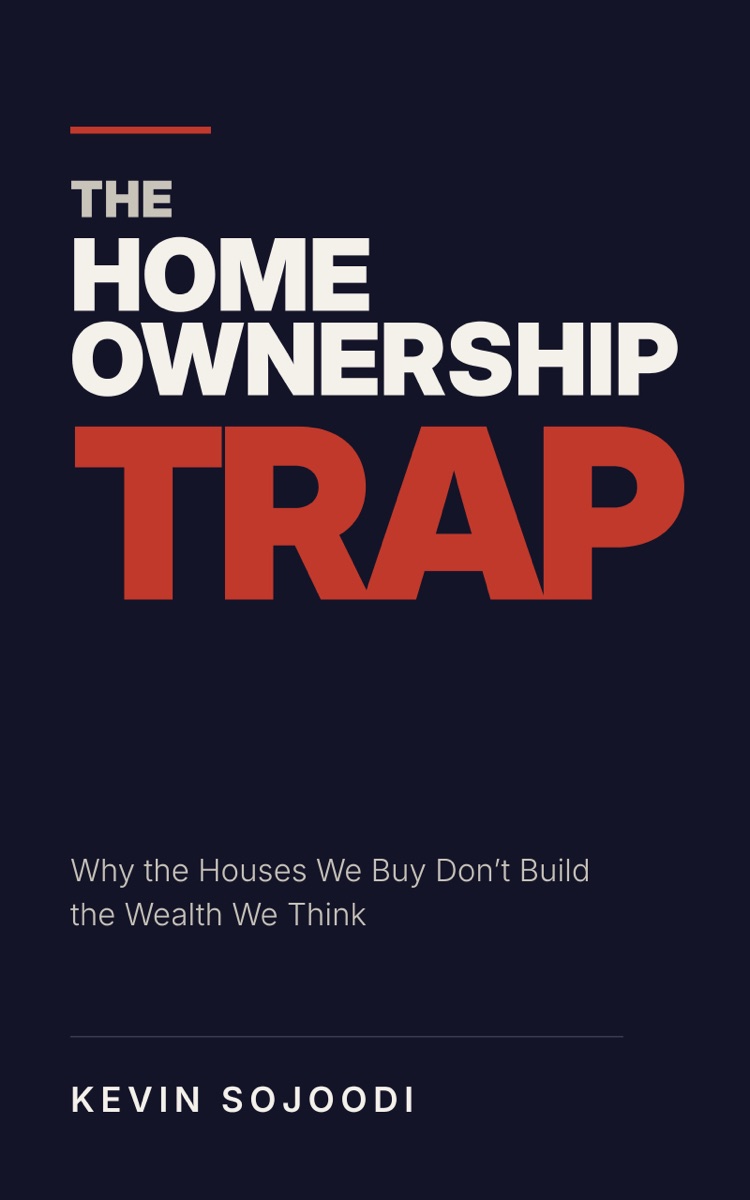
The Homeownership Trap
Why the Houses We Buy Don’t Build the Wealth We Think
The argument
The arithmetic is never put in one place.
The family home, as it is actually financed, taxed, maintained and eventually sold, does not reliably produce the wealth people believe it produces — and almost nobody in the transaction has a reason to say so.
That is not a conspiracy, and the book argues against reading it as one. The lender is doing its job. The agent is doing theirs. The government is answering to its voters. A system can produce a misleading result without anyone in it lying.
The book is worked in Canadian dollars, on Canadian mortgages, against British Columbia’s taxes and strata law, with a long detour through Dubai. The mechanics are not Canadian. Leverage, transaction costs and the cost of holding one illiquid asset behave the same way everywhere. Readers elsewhere can substitute their own rates, taxes and prices — the structure holds.
Who it is for
The person who is about to make the decision, and the person who made it years ago and has never worked out why a large gain on paper has not become anything they can actually use.
Contents
Nineteen chapters in seven parts.
With notes and sources, a true-cost-of-ownership worksheet, the full rent-versus-buy model and a glossary.
-
Part One
The Dream How a financial product became a life goal
- 1The Homeownership Dream MachineHow society learned to sell you a mortgage and call it a dream
- 2The Ownership IllusionWhy building equity is not the same as building wealth
- 3The Entry RitualThe down payment, the mortgage, and what you actually signed
- 1
-
Part Two
The Machine Who benefits, and why nothing changes
- 4The House Always WinsWhy no government can afford to let prices fall
- 5The Best Product Ever InventedWhy the mortgage is the most profitable arrangement in modern banking
- 6What You Are Actually BuyingLand, structure, and the economics of how houses get built
- 7Whose Side Am I On?An honest accounting of my own profession
- 4
-
Part Three
The Cycle Why boom and bust are built in
- 8The Engine Runs Both WaysHow credit drives prices up, and how the same machinery brings them down
- 9Why People Lose Their HomesLeverage, timing, and the psychology of holding on too long
- 10Prices Always Go UpExamining the most widely held financial belief in the country
- 8
-
Part Four
The Hidden Cost What the asset costs to hold
- 11The Bill Nobody Adds UpTen years of ownership, itemised
- 12The Cost of Staying PutIlliquidity, optionality, and the decisions you quietly stop making
- 11
-
Part Five
The Landlord Answer Why residential property is not fixed by adding a tenant
- 13Let the Tenant Pay for ItThe arithmetic of the Vancouver rental condo
- 14Can’t Sell, Can’t Rent, Can’t KeepThe presale contract, the strata, and the asset that wears out
- 13
-
Part Six
The Alternative Where the capital should go instead
- 15Running the Numbers ProperlyRent against ownership, with every assumption on the table
- 16Priced by ArithmeticWhy an income-producing building is a different kind of asset
- 17Two QuestionsAffordability, capital allocation, and the difference between them
- 15
-
Part Seven
A New Wealth Framework What the decision is actually for
- 18Not Everyone Is ChoosingConstraints, obligations, and how to actually decide
- 19What You Would CarryOn wealth, and what nearly two decades in this business taught me about it
- 18
- Paperback
- 295 pages · 6 × 9 in
- ISBN
- 9798167714564
- Ebook
- Kindle
- Published
- November 2026 · independently published
Not advice. The book is general information. It is not financial, investment, legal, tax, accounting or real estate advice, and nothing in it is a recommendation to any individual reader. Every calculation is illustrative and worked on assumptions stated in the text.
The series
The first of three.
This book deliberately declines to tell you what to do with your money. Setting out the alternatives properly takes more room than one book allows.
-
Book one · Out now
The Homeownership Trap
Why the family home does not reliably build the wealth people expect of it.
-
Book two · In preparation
Comparing the asset classes
The real estate asset classes set against one another, and why multifamily rental comes out as the most reliable.
-
Book three · In preparation
The practical manual
Buying a first multifamily building, and expanding from there.