The Homeownership Trap · out now
Your home is not the investment you were told it was.
The family home, as it is actually financed, taxed, maintained and eventually sold, does not reliably produce the wealth people believe it produces — and almost nobody in the transaction has a reason to say so.
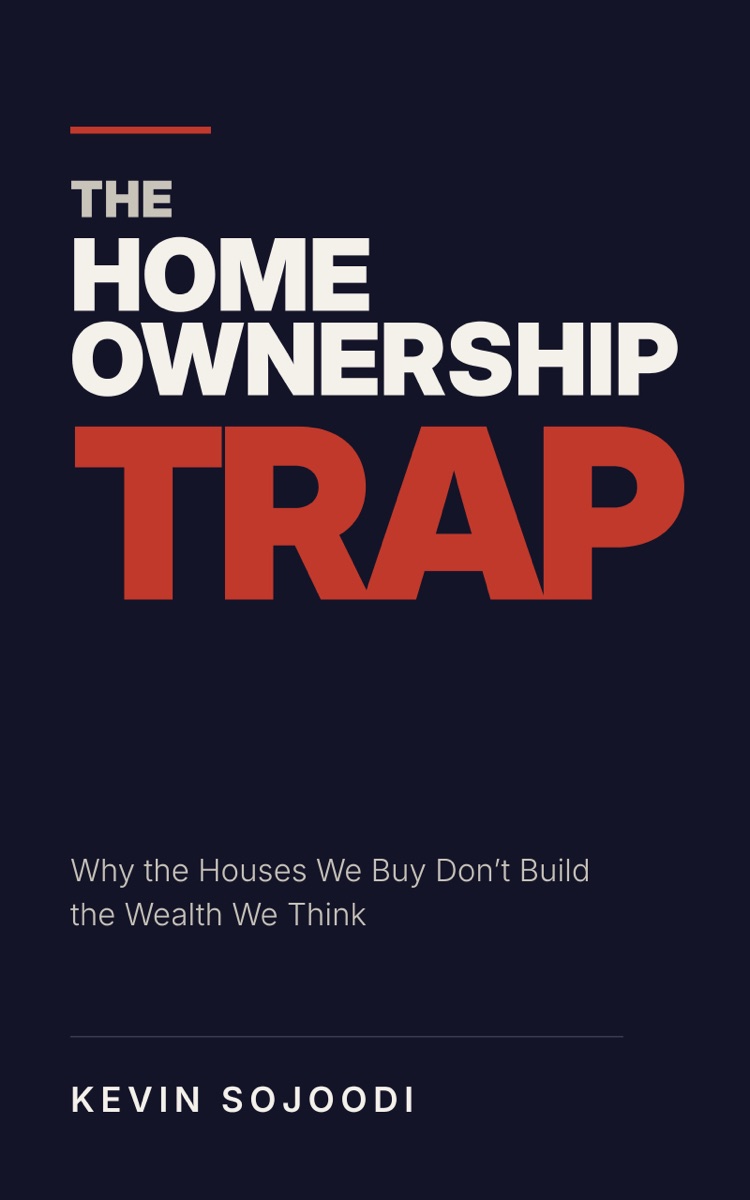
What the book is
A disclosure, not a manual.
Most people believe that buying a home is how an ordinary person builds wealth. This book examines that belief and finds it does not survive the arithmetic.
It does not say that owning a home is a mistake. It does not predict a crash, and it does not tell anyone to sell. It puts the numbers that are usually spread across a lender, an agent, a tax return and a strata budget into one place, in front of the person who pays for all of them.
You may finish it and buy a house anyway. That is a perfectly reasonable outcome. The point is that the decision gets made deliberately, with its costs visible.
How it argues
Four commitments you can hold it to.
-
Assumptions first
Every number is given with its assumptions, stated before the result, so you can change them and redo the sum yourself.
-
Sources classified
Every factual claim is marked as published data, statute, research, calculation or personal observation, so you can see what weight it carries.
-
The other side, in the main text
Where the case against the argument is good, it is made in full. Chapter Fifteen runs rent-versus-buy and finds it close to a coin flip on central assumptions.
-
Honest about the unknown
The deciding variable is future appreciation. Nobody can forecast it, the author included, and the book does not pretend otherwise.

The author
Written from inside the business.
Kevin Sojoodi has worked in real estate since 2007, in Dubai and in Metro Vancouver — residential sales first, then commercial, specialising in multifamily investment properties and development land.
He is no longer a licensed agent. There is no seminar at the end of the book and no program to enrol in. Whatever else is wrong with the argument, it is not being made to sell you something.